AI Workflow Automation: Tools, Examples, and How-To Guide

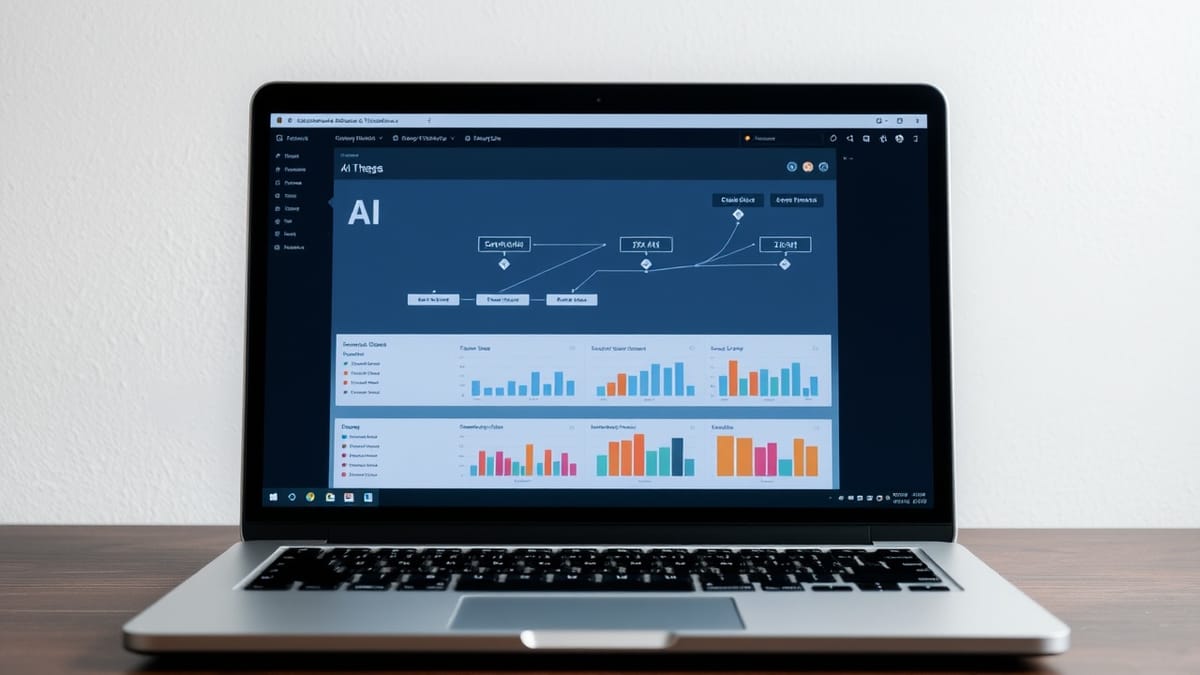
In today's fast-paced digital landscape, businesses are constantly seeking ways to improve efficiency, reduce costs, and gain a competitive edge. One of the most promising solutions is AI workflow automation, which involves using artificial intelligence to automate complex and repetitive tasks. This guide will explore the fundamentals of AI workflows, their components, and the numerous benefits of AI workflow automation. We will also look at practical examples and a step-by-step approach to implementing AI in your business processes.
Understanding AI Workflows
What are AI Workflows?
AI workflows represent a sequence of automated tasks powered by artificial intelligence. Unlike Traditional automation tools are being replaced by more advanced AI-powered tools., which relies on predefined rules, AI workflows leverage machine learning and natural language Processing to adapt to changing conditions and make intelligent decisions is enhanced by the use of AI applications. These workflows can streamline a variety of routine tasks, from data entry and customer service to content creation and real-time analytics. By Integrating AI assistants can significantly improve productivity. into existing business processes, organizations can significantly reduce manual work and optimize their operations.
Components of an AI Workflow
An AI workflow typically consists of several key components working together to achieve a specific goal. First, there's data input, which provides the raw material for the AI model. Next is the AI agent, or series of agentic ai, which uses algorithms to process the data and perform the required tasks. Workflow orchestration manages the sequence of tasks and ensures they are executed in the correct order. The workflow builder helps design and customize the workflow to meet specific needs. Finally, output provides the result of the AI workflow, which can be used for decision-making or further process automation. The automation platform AI-powered tools facilitate communication between these components.
| Component | Description |
|---|---|
| Data Input | Provides raw material for the AI model. |
| AI agent (or series of agentic ai) | Uses algorithms to process the data and perform the required tasks. |
Benefits of AI Workflow Automation
The benefits of AI workflow automation are extensive and transformative. By automating repetitive tasks, businesses can free up employees to focus on more strategic and creative activities. This not only increases productivity but also improves employee satisfaction. AI and automation can also significantly reduce errors and improve accuracy, leading to better decision-making and reduced costs. Furthermore, AI-driven workflow can optimize processes in real-time, leading to faster response times and improved customer service. Ultimately, AI workflow automation empowers organizations to achieve greater efficiency, innovation, and competitiveness, all by using ai capabilities and ai features.
Automation Tools and Platforms
Overview of AI Workflow Automation Tools
The current market offers a plethora of automation software options. AI workflow automation tools, each designed to automate and streamline business processes. These automation tools leverage artificial intelligence to handle repetitive tasks, allowing businesses to focus on more strategic initiatives. From AI agents that manage data entry to sophisticated automation platforms that optimize complex operations, the options are vast. Businesses need to assess their specific needs and use AI to determine which AI tool best aligns with their workflow requirements. By carefully selecting and integrating AI workflow tools, companies can enhance efficiency, reduce manual work, and drive innovation through ai and automation. The rise of generative AI provides even more powerful ai solutions.
Popular Automation Platforms
Several automation platforms have emerged as leaders in the AI workflow automation space, offering comprehensive suites of features for designing, orchestration, and deploying AI-powered workflows. These platforms often include AI applications to enhance user experience. no-code or low-code interfaces, making it easier for non-technical users to build and customize their own ai workflows. Key players in this market provide workflow tools that support robotic process automation (RPA), machine learning, and natural language processing capabilities. By leveraging these automation platforms, businesses can automate a wide range of routine tasks, from customer service interactions to supply chain management, achieving significant gains in productivity and operational efficiency by using ai capabilities.
No-Code Workflow Automation Solutions
No-code workflow automation solutions are revolutionizing the way businesses approach process automation, by enabling individuals without extensive programming knowledge to create and manage sophisticated AI workflows. These platforms offer intuitive, drag-and-drop interfaces that simplify the design and deployment of workflow automation platforms. AI-driven workflows. With no-code solutions, businesses can quickly integrate AI into their operations, automate repetitive tasks, and streamline routine tasks without the need for specialized developers. This democratization of AI workflow automation empowers more employees to contribute to process automation initiatives, driving innovation and efficiency across the organization and allowing for implementing ai to be easier. This intelligent automation, powered by no-code, reduces manual work.
Implementing AI Workflow Automation
How to Use AI in Business Processes
To effectively use AI in business processes, it's crucial to identify areas where automation can yield the greatest impact. Begin by analyzing existing workflows to pinpoint routine tasks that are time-consuming, error-prone, or require significant manual work. These are prime candidates for AI workflow automation. Then, consider how artificial intelligence can automate these processes, whether through machine learning models, natural language processing, or robotic process automation. For example, AI agents can be deployed to handle data entry, customer service inquiries, or content generation, freeing up human employees for more strategic activities.
Steps to Automate Your Workflows
Implementing AI in your workflows involves several key steps. First, define the scope of your ai workflow automation project and set clear objectives. Next, gather and prepare the necessary data for training your AI model. Then, select the appropriate automation tool or automation platform based on your specific requirements. Many automation platforms are no-code.
| Step | Description |
|---|---|
| Selection | Select the appropriate automation tool or automation platform based on your specific requirements. Many automation platforms are no-code. |
| Design | Design your AI workflow using a workflow builder, specifying the sequence of tasks and the rules for decision-making. |
Test and refine your AI workflow to ensure it performs as expected, and then deploy it into your business processes. Finally, continuously monitor and optimize your ai workflows to maximize their effectiveness.
Using Workflow Builders for Automation
Workflow builders are essential for designing and customizing ai workflows that automate complex business processes. These automation tools typically offer a visual, drag-and-drop interface that makes it easy to create and manage ai workflows without requiring extensive coding knowledge. Key features and benefits are summarized below:
| Feature | Benefit |
|---|---|
| Visual Interface | Easy creation and management of ai workflows. |
| Integration Capabilities | Ability to integrate various AI agents and automation tools. |
With a workflow builder, you can define the sequence of tasks, add conditional logic. Many automation platforms also provide pre-built workflow templates that can be customized to meet your specific needs. By leveraging workflow builders, businesses can quickly and efficiently implement AI in their operations, streamline repetitive tasks, and optimize their overall efficiency. Choosing ai solutions that include no-code workflow tools, like n8n, enhances accessibility.
Practical Examples of AI Workflow Automation
Case Studies of Successful Automation
Examining case studies of successful AI workflow automation Implementations provide valuable insights into how businesses are leveraging AI-powered tools. artificial intelligence to transform their operations. For instance, a financial institution might use AI to automate fraud detection, significantly reducing false positives and improving accuracy. Another example could be a retail company integrating AI to optimize its supply chain, predicting demand and ensuring timely delivery of products. These case studies often highlight the importance of selecting the right type of AI for your needs. automation platform and tailoring AI workflows to specific business processes. Companies like n8n Automation software often provides no-code automation tools.
Real-World Applications of AI Agents
AI agents are finding numerous real-world applications across various industries, demonstrating their versatility and effectiveness in automating routine tasks. In customer service, AI agents can handle a high volume of inquiries, providing instant support and resolving common issues, allowing human agents to focus on more complex problems. Within healthcare, AI agents can automate the scheduling of appointments, data entry, and even assist in diagnostics by using machine learning, ultimately improving patient care and reducing manual work for healthcare providers. These examples showcase the transformative potential of artificial intelligence workflows. AI in streamlining operations and improve efficiency using robotic process automation.
Using Microsoft Power Automate
Microsoft Power Automate is a powerful automation platform that enables users to create automated workflows connecting various apps and services, thereby allowing the implementation of ai to be seamless. With its user-friendly interface, even those without extensive coding knowledge can design and deploy custom ai workflows to automate repetitive tasks such as data entry, email management, and file synchronization. By integrating AI Capabilities, such as traditional automation tools, are being enhanced with AI. natural language processing and machine learning, Power Automate can further enhance these workflows to handle more complex scenarios, making it a versatile ai tool for businesses looking to improve productivity and efficiency through AI workflow automation. It is a crucial automation tool to use ai.
Challenges and Considerations
Common Challenges of AI Workflow Automation
Despite the numerous benefits, AI workflow automation presents several challenges that businesses must address to ensure successful implementation. One common hurdle is data quality, as AI models rely on accurate and comprehensive data to make informed decisions with the help of agentic ai. Another challenge is the need for skilled personnel to design, deploy, and maintain AI workflows, requiring investments in training and recruitment. Moreover, organizations must consider ethical implications of AI, such as bias in algorithms and privacy concerns, and take steps to mitigate these risks using intelligent automation and proper process automation.
Comparing Traditional Automation and AI Automation
While both traditional automation and AI automation aim to improve efficiency and reduce manual work, they differ significantly in their capabilities and applications. Traditional automation relies on predefined rules to execute tasks, making it suitable for structured and predictable processes. In contrast, AI automation leverages machine learning and natural language processing to adapt to changing conditions and make intelligent decisions, allowing it to handle more complex and unstructured tasks. AI workflow automation offers greater flexibility and adaptability compared to traditional automation, enabling businesses to optimize their operations in real-time and respond more effectively to evolving market demands. This streamlining effect, powered by AI, marks a significant advancement in business process automation. Consider using tools like n8n.
Future of Workflow Automation with AI
The future of workflow automation with AI is poised for significant advancements, driven by ongoing developments in artificial intelligence and related technologies. As AI models become more sophisticated, they will be able to handle increasingly complex tasks, further automating and streamlining business processes. The rise of generative AI is expected to revolutionize content creation, customer service, and other areas, unlocking new opportunities for automation. Moreover, the increasing availability of no-code automation platforms will empower more businesses to adopt AI-driven workflow, democratizing access to this transformative technology using agentic ai and other ai capabilities.